

How to Design an Outdoor Dining Space for Year-Round Entertaining in Palm Beach Gardens
In Palm Beach Gardens, outdoor dining isn't a seasonal luxury; it's a way of life. With warm weather stretching across most of the calendar, homeowners here have the rare opportunity to entertain outdoors nearly every week of the year.
However, that opportunity comes with a design challenge: how do you create a space that works just as well for a casual Tuesday dinner as it does for a celebration with twenty guests?
The answer starts with choosing the right outdoor dining furniture in Palm Beach Gardens and building a layout designed to perform in every season, not just look good for a few months.

Why Year-Round Entertaining Requires a Different Design Approach
Unlike homes in seasonal climates, where outdoor furniture gets a few months of heavy use before being packed away, Palm Beach Gardens patios face near-constant sun, humidity, and the occasional summer downpour all year long. Furniture and layout need to perform consistently under those conditions, not just survive a single season.
Entertaining also tends to happen more often and more spontaneously. A last-minute dinner with neighbors shouldn't require rearranging your entire patio. The goal is a space that's always "hosting ready," one that transitions effortlessly from an everyday family meal to a larger gathering without a major reset in between.
Start with Flexible, Expandable Seating
Seating flexibility is one of the most important (and most overlooked) elements of year-round outdoor dining design. A table that only comfortably seats four is fine for weeknight meals. However, it becomes a limitation the moment you want to host a larger group.
Consider these approaches to build in flexibility from the start:
- Extendable or modular tables that can grow from an intimate four-top to a table for eight or more when needed.
- Mixed seating types, such as pairing armchairs with a bench on one side, maximize seating capacity without requiring extra chairs to store.
- A secondary seating zone, like a bar-height counter or high-top table, that gives guests a casual spot to gather during cocktail hour before moving to the main table.
This kind of flexible foundation means you're not choosing between "everyday functional" and "party-ready"; your space can be both, depending on the day.
Choose Materials Built for Florida's Climate
Material selection matters more in Palm Beach Gardens than in almost any other climate. Between intense sun, high humidity, salt-tinged coastal air, and sudden afternoon storms, outdoor dining furniture here needs to withstand conditions that would quickly wear down lower-quality pieces.
Some of the best-performing materials for this climate include:
- Powder-coated aluminum: rust-resistant, lightweight, and well-suited to clean, modern silhouettes. It requires minimal upkeep and holds its finish well, even with regular exposure to humidity.
- Teak: a naturally weather-resistant hardwood that ages into a beautiful silvery patina over time, though it benefits from occasional oiling if you want to preserve its original golden tone.
- Resin wicker: a warm, woven look of traditional wicker without the wear issues, since it's engineered specifically to resist moisture and UV damage.
- Performance fabrics: such as Sunbrella or olefin, for cushions and seat coverings, which resist fading, mildew, and moisture buildup far better than standard outdoor fabrics.
Each has slightly different maintenance needs, but all four are proven performers in South Florida's climate, making them worth prioritizing for a space meant for frequent use.
Design for Comfort in Every Season
Furniture is only part of the equation; comfort also depends on how well your space handles Florida's heat, sun, and evening entertaining needs.
Shade is essential, even in a climate where sunshine is a selling point. Umbrellas, pergolas, and retractable awnings extend usable dining hours during peak sun, particularly for midday meals or early-evening gatherings. Without it, even a beautifully designed dining area can go unused during the hottest stretches of the day.
Lighting deserves equal attention, since much of the entertaining here happens after dark when temperatures cool. String lights, lanterns, and built-in fixtures all add ambiance while making the space functional into the evening.
Finally, consider airflow and layout. Positioning furniture to take advantage of natural breezes and leaving room between pieces for guests to move comfortably keeps the space feeling open even during Florida's more humid months.
Layer in Details That Elevate the Space
Once the foundational elements are in place, the finishing details make a dining space feel intentional rather than simply functional.
Table linens, runners, and place settings can be swapped seasonally to keep things feeling fresh without any major furniture changes. A simple centerpiece, greenery, candles, or natural elements like driftwood or shells, adds warmth to the table.
Outdoor rugs and planters help visually anchor the dining area, and coordinating your furniture's finish with the rest of your outdoor living space creates a cohesive look that feels like a true extension of your home.

Frequently Asked Questions
How many people should my outdoor dining table seat for regular entertaining?
It depends on how often you host larger groups versus everyday meals. Many homeowners find that a table seating four to six comfortably, with the option to extend to eight or more, offers the best balance of everyday practicality and entertaining flexibility.
What's the most durable material for daily outdoor use in Palm Beach Gardens?
Powder-coated aluminum and teak are both excellent choices, thanks to their natural resistance to rust, humidity, and sun exposure.
Do I need shade structures if my patio already gets some natural coverage?
Yes, in most cases. Even partial natural shade often isn't enough during peak sun hours, so supplemental shade (like an umbrella or pergola) helps keep the space comfortable and usable throughout the day.
How do I keep my outdoor dining space looking fresh through humidity and rain?
Choosing weather-resistant materials from the start goes a long way. Still, regular cleaning, occasional fabric treatments, and furniture covers during heavy storms all help minimize wear and keep everything looking its best.
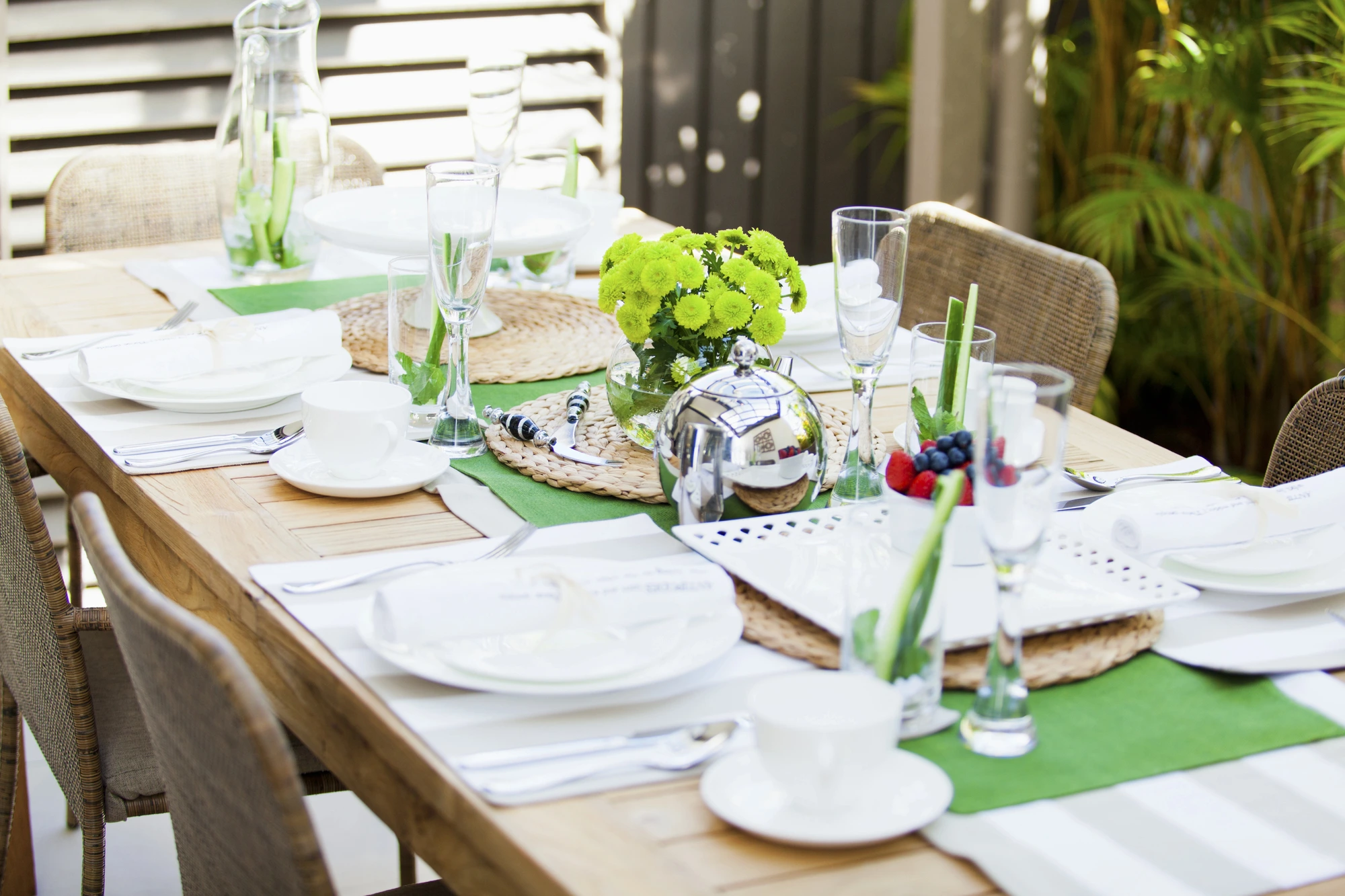
Let's Design Your Perfect Year-Round Outdoor Dining Space
At Caribe Home, we believe that whether you're hosting an intimate dinner or a full backyard celebration, your outdoor dining space should work just as hard as you do. Contact us today for expert guidance on furniture, layout, and design; we're here to help with any outdoor design need, big or small.
Design Services
We offer on-site visits as part of the experience, to bring expert advice and style suggestions directly to you. We'll help you shape a personalized design plan for your outdoor space that feels elevated, inviting, and a style all your own.
Your plan can bring together pieces from our hand-selected collection of outdoor living and dining furniture, accessories, décor, and garden planters, all reflecting Caribe Home's passion for quality and Caribbean-inspired design. Prefer to see the collection in person? Visit our boutique in West Palm Beach, open Monday through Saturday from 10 AM to 5 PM.
-p-800.webp)
.webp)
.webp)
.webp)
